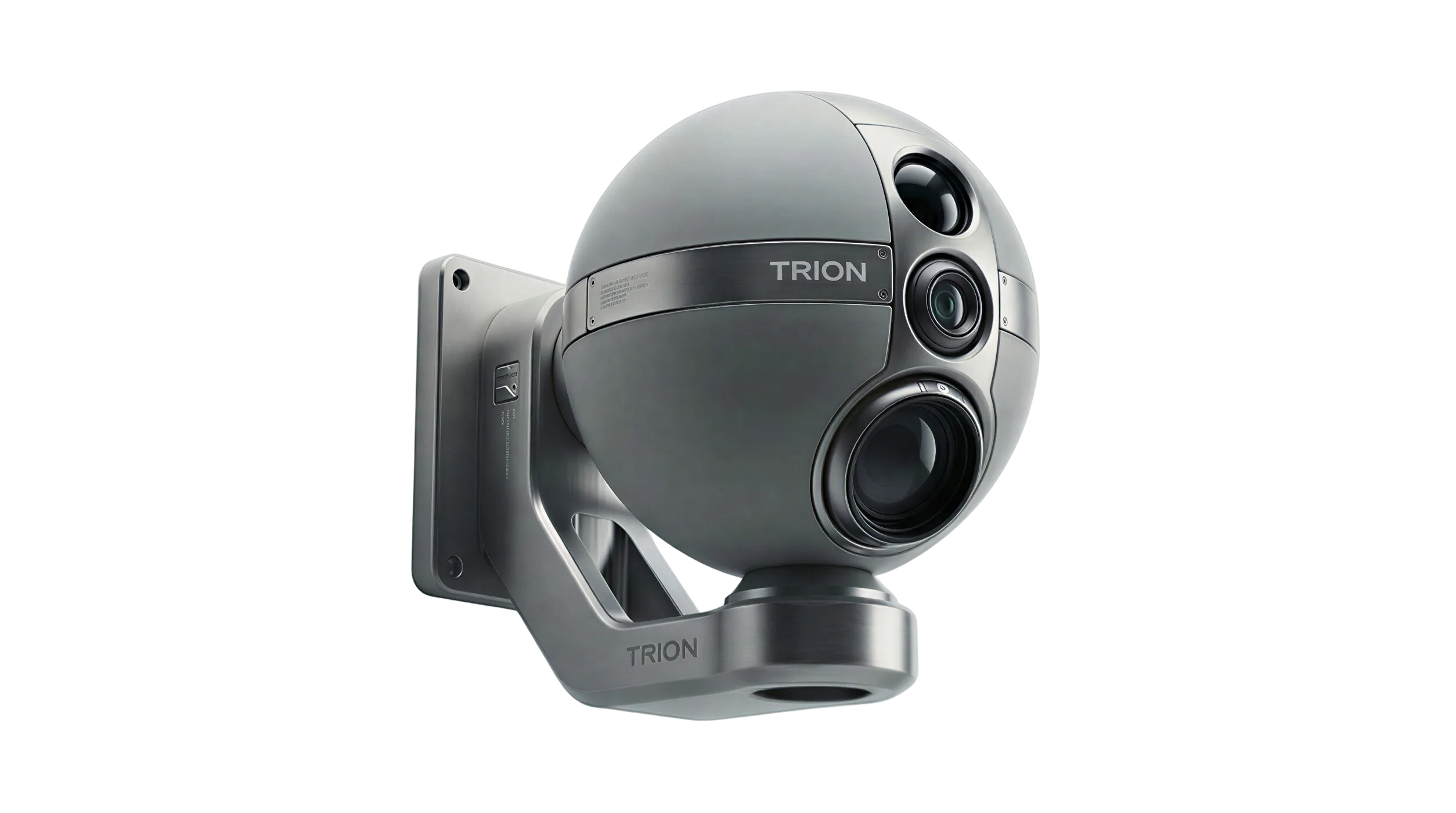
Why Surveillance Alone Was Never Enough.
Surveillance has been treated for decades as a proxy for security. Add cameras, increase coverage, store more footage, and safety will follow. The logic feels intuitive, but it has always been incomplete.
Observation does not equal understanding.
Cameras are exceptional at capturing visual data. They are far less effective at interpreting meaning. A camera can record movement endlessly without knowing whether that movement is routine, suspicious, accidental, or intentional. As a result, traditional surveillance systems accumulate vast amounts of information while offering very little insight.
This is why many environments today are heavily monitored yet still vulnerable. Surveillance systems were designed for review, not comprehension. They assume that a human will eventually watch, interpret, and decide. At scale, this breaks down. Human attention does not scale linearly with data.
The Inversion of Meaning
The industry’s response has historically been to add more layers: more monitors, more guards, more alerts. But this approach treats symptoms rather than causes. Security fails not because data is unavailable, but because meaning arrives too late.
The difference between safety and incident often lies in subtle shifts: a pattern that deviates slightly from the norm, a behavior that persists longer than expected, a movement that does not align with context. These signals rarely trigger alarms on their own. They only become obvious in hindsight, once an event has already occurred.
Visibility without understanding is not safety. It is hindsight.
The Function of Interpretation
An intelligent security system does not ask whether something moved. It asks whether something changed. It compares behavior against baselines, correlates activity across time and space, and evaluates whether a situation is evolving toward risk. This is not a function of better optics or higher resolution. It is a function of interpretation.
When intelligence is embedded into surveillance, the role of the system changes. It moves from passive observation to active assessment. It begins to reduce noise instead of creating it. It highlights what matters instead of demanding constant attention.
This shift also redefines the role of human operators. Instead of watching endlessly and reacting under pressure, humans are positioned as decision-makers. They engage earlier, with context, and with a clearer understanding of why an intervention may be necessary.
At AVZDAX, we design security around comprehension, not just coverage. Systems that cannot interpret behavior will always lag behind events. Systems that can will begin to prevent them.